
Project Overview Bee With Me transforms the solitary word puzzle experience into a shared journey. Inspired by the NYT Spelling Bee, this project explores how real-time collaboration changes the dynamics of word discovery, turning individual "aha" moments into collective celebrations. Role: Product Designer (UI/UX) Tools: Lovable AI, Figma (conceptual, branding), ChatGPT, natural language prompting Timeline: Iterative development through conversational design Context* Since April 20
Bee With Me transforms the solitary word puzzle experience into a shared journey. Inspired by the NYT Spelling Bee, this project explores how real-time collaboration changes the dynamics of word discovery, turning individual "aha" moments into collective celebrations.
Role: Product Designer (UI/UX)
Tools: Lovable AI, Figma (conceptual, branding), ChatGPT, natural language prompting
Timeline: Iterative development through conversational design
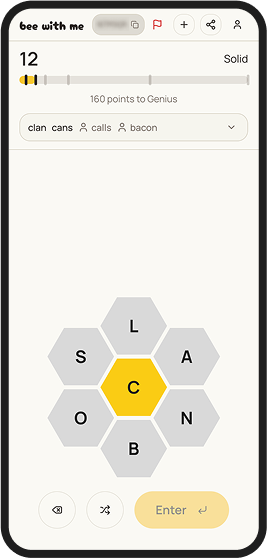
Since April 2025, I started including my parents in my daily NYT Spelling Bee ritual. I've been screen sharing my game on a video call, which they'll both join even though they're sitting right next to each other, kicking off the audio feedback hell.
Once they sort that out, they'll shoot off their guesses for the game even though I'm going through my initial low-hanging fruit guesses, and I'll be met with, "Why didn't you input my word yet?!" With more difficult puzzles, the guesses will start to be just that - guesses. I will be forced to input fake words just for good measure.
Finally, when one of us gets the word that brings us over the "Genius" threshold, someone will say, "But I said that word a long time ago!"
I had grinned and bore it daily because I love my parents... but one's patience can only run so deep. I decided to build "bee with me" for my own sanity.
*tl;dr - I got tired of screen sharing and wanted everyone to input their own words.
The NYT Spelling Bee is beloved but inherently solitary. Players text each other hints, share screenshots of progress, or simply discuss the puzzle after the fact. The experience of playing together doesn't exist. While there are clones that encourage competition, there aren't games that support collaboration. Could enabling a "co-op" version could drive engagement, retention, and organic growth with an audience who would prefer friendly over versus gameplay?
The NYT Spelling Bee is beloved but inherently solitary. Players text each other hints, share screenshots of progress, or simply discuss the puzzle after the fact. The experience of playing together doesn't exist.
Core Question: How do we preserve the satisfying mechanics of word discovery while adding the joy of real-time collaboration?
Collaborative NYT-Style Spelling Bee Prototype
Build a mobile-first, real-time collaborative word game that closely mirrors the experience of NYT Spelling Bee, designed for 2–3 players playing together from their own phones.
Core Goal
Players collaboratively try to reach a shared “Genius” level by finding valid words from a fixed letter set, without screen sharing or turn-taking friction.
Game Mechanics (Authoritative System)
Scoring & Progress
Collaboration Behavior
Letter Shuffling (Individual Behavior)
UI Constraints
Technical Constraints
Delivery Requirements
Immediately, what Lovable produced was what seemed like a viable game. Upon further inspection, my human intervention was necessary:
choose seven unique lettersusing the scrabble dictionary, create a list A of all the words that use any combination of these lettersdo any of the words use all seven letters at least once?no: this is not a valid list, remove this list and choose another set of seven unique lettersyesif there are words that are three or fewer letters in length, remove them from the listchoose one of the unique letters. this is the primary letter.using list A, create a list B of all the words that use the primary letterdo any of the words use all seven letters at least once?no: this is not a valid primary letter, remove this list and choose another primary letteryes: this is a valid primary letter and list B is a valid puzzleFollowing this prompt and limiting puzzles to have total points of 75-250, the puzzle generation was much better, allowing me to share the app for testing with my parents.
Sharing and joining a game needed to be frictionless. I had the AI implement the following features:

Another challenge of sharing one screen and having one person input the words was not knowing who input which word; a lot of the times the three of us would compete over who actually thought of the pangram.
Although we're all working towards reaching Genius together, we still have some pride in our contributions, which I wanted to make known while playing the game. I prompted:
Would it be possible to demarcate which words I've contributed vs which words others have contributed?


Along with the ability to upload your own picture as your avatar, the unlimited subscription offers unlimited puzzles past the daily puzzle and game history. None of these affect gameplay and only serve as a means to support the app. I choose to use Stripe to manage the subscriptions for ease of use for the user as well as brand recognition for security and reliability.
There are a few features I wish the NYT Spelling Bee had so I implemented them in "bee with me".
Originally, the points and progress to the next tier is hidden behind a click of the progress bar. "bee with me" surfaces it so users don't have to leave their game.
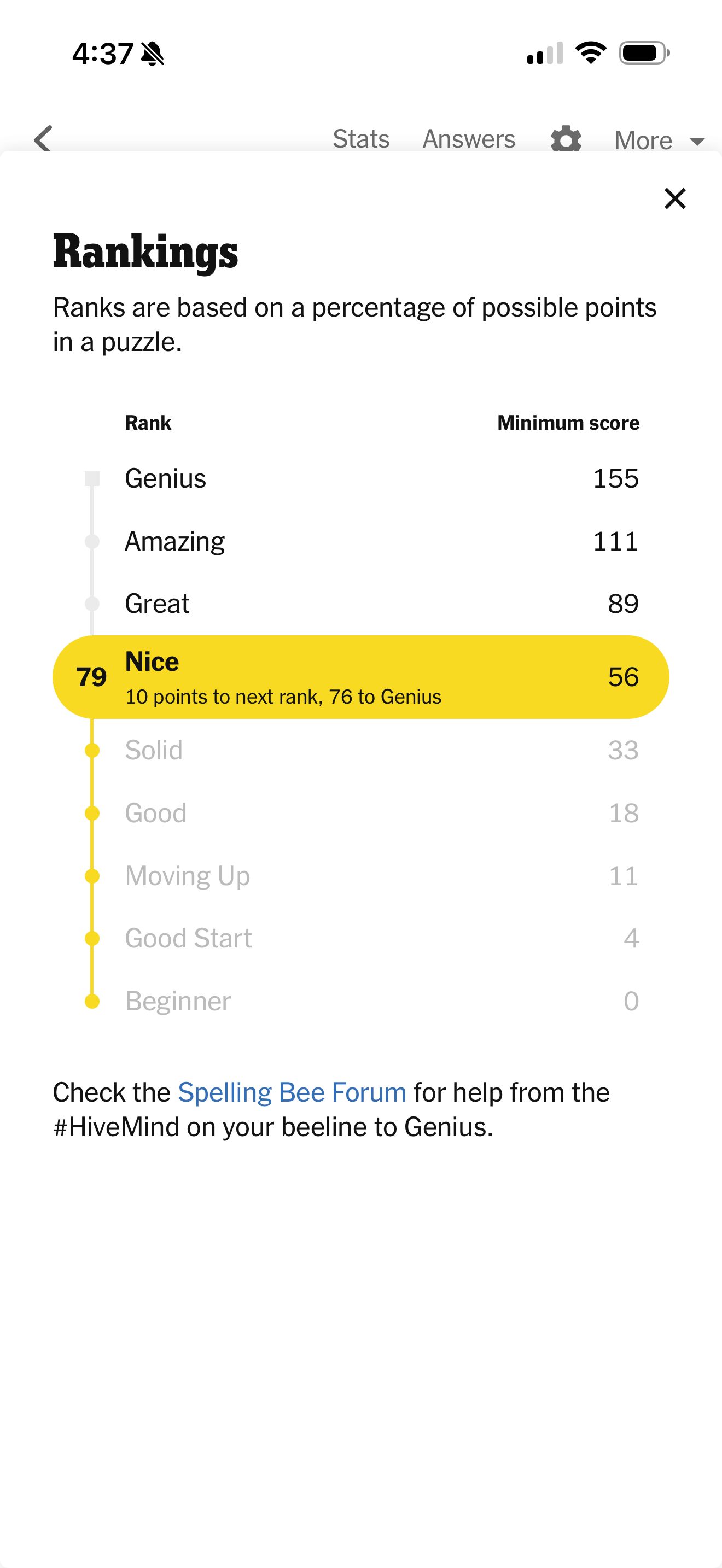
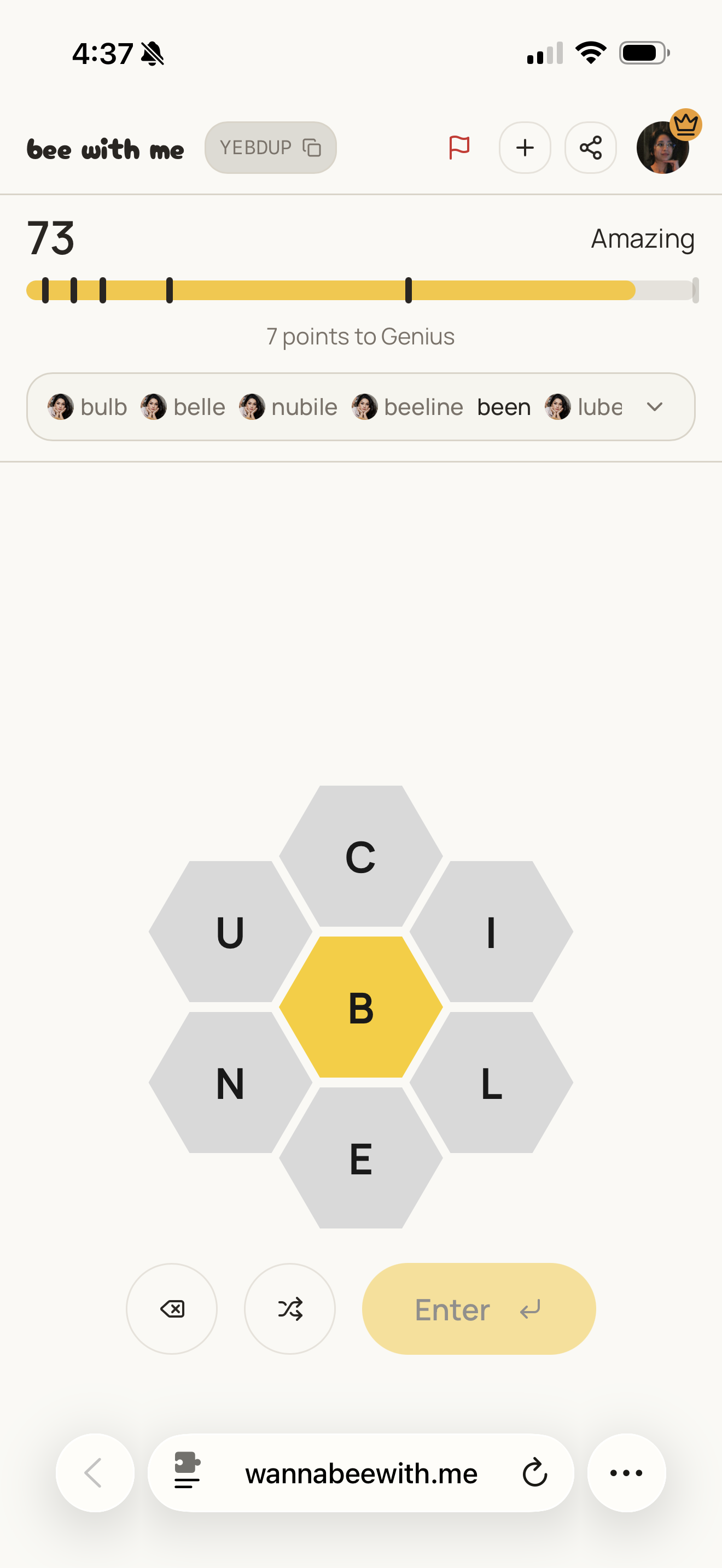
NYT Spelling Bee progress (left); "bee with me" progress (right)
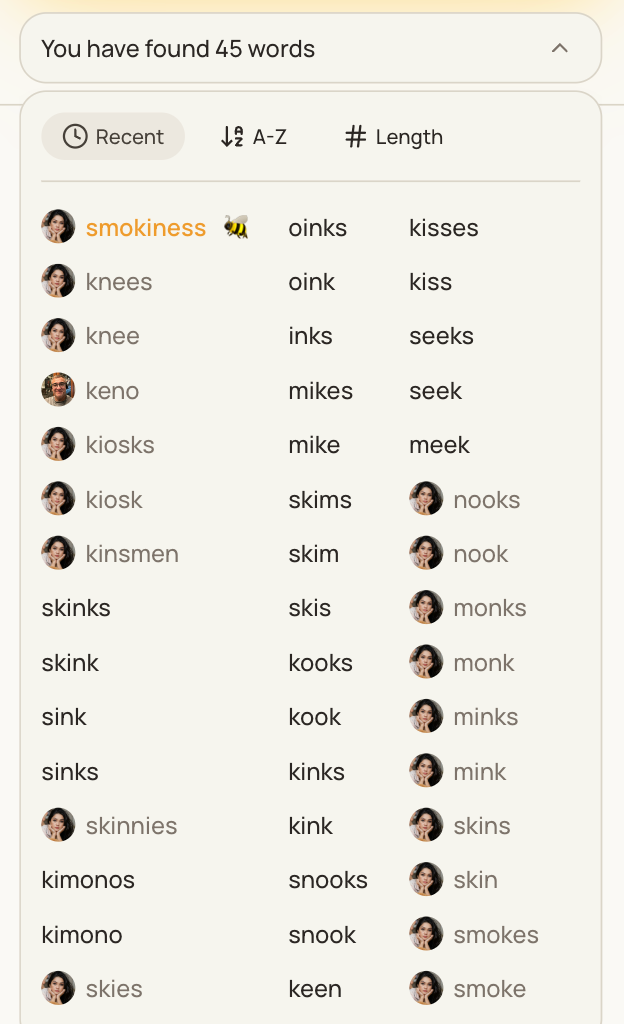
In the original NYT Spelling Bee, the preview of the found words list is sorted by recently found and, when expanded, are listed in alphabetical order. However, I've always wanted to see how I missed a word I should've found earlier and wanted to follow my train of thought.
Alternatively, if one wanted to see more words at a glance on top of the provided preview, users are able to scroll horizontally on the list without having to expand the list.
Lastly, in the original game, the messages when a word inputted is "Already found" or "Not in word list" are stylized the exact same way. This visual affordance would always be confusing for me, so I made sure that the "Already found" message gave different and more positive feedback.
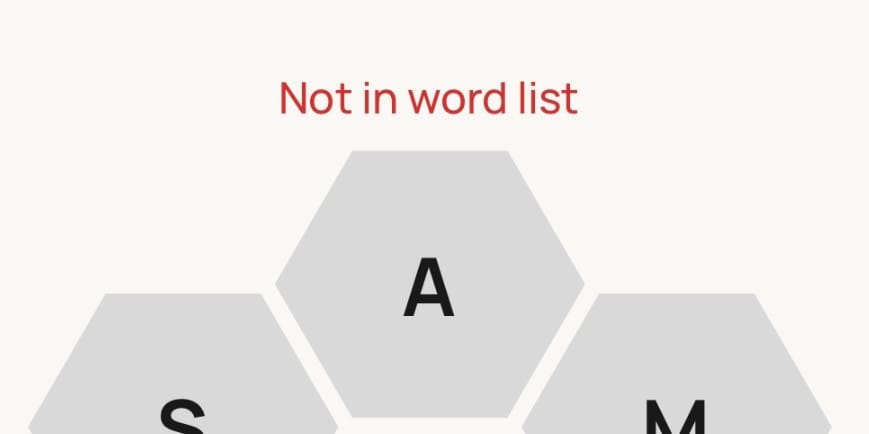
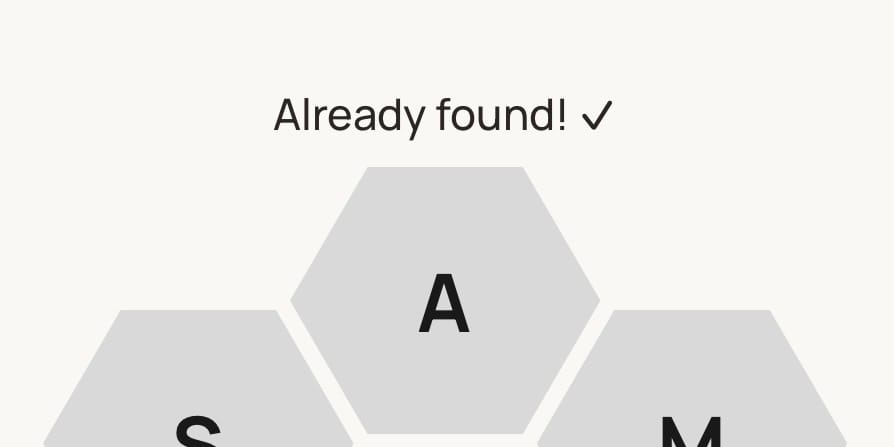
"Not in word list" ☹️ (left); "Already found! ✔️" (right)
No game goes without bugs so feedback is encouraged. One can do so from the menu, which will provide game details as well, or the contact page.
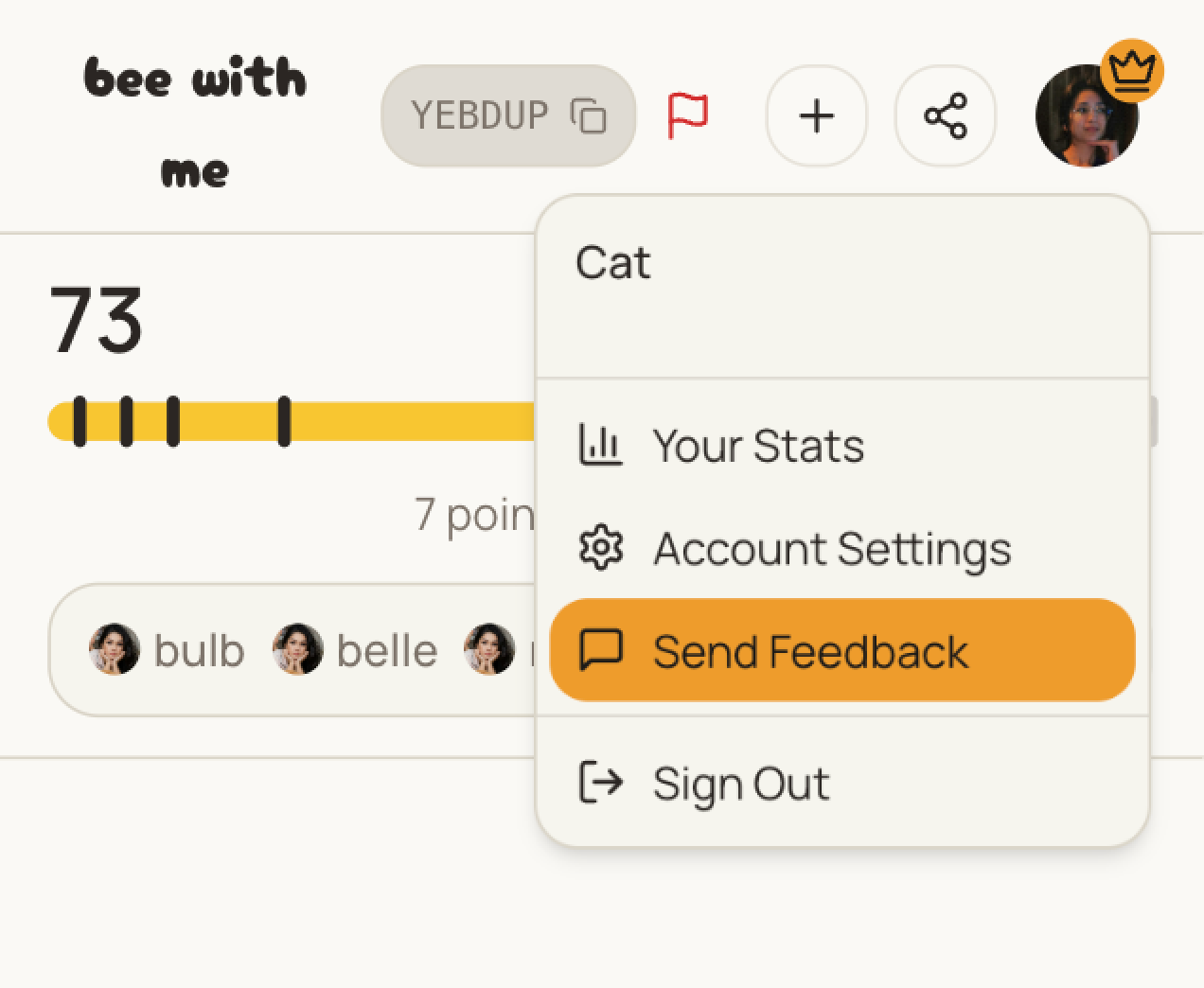
This collecion method has already allowed users to file bugs such as the daily puzzle not generating, codes not properly inputting, and screen sizes and zooming making the game unplayable. User feedback is vital to playability.
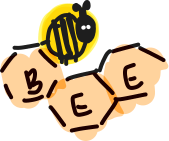
The initial sketch/final logo (left). High fidelity logo (right).
I initially created a sketch in FigJam to act as a basis for a high fidelity logo. However, once I created it, I felt that the high fidelity version had lost its charm of the sketch and I had decided to keep the sketch as the final logo. If anything, it's a reminder that there's still a human behind the AI-built app.
The combination of my very shallow background in software development and my ambitions for building with vibe coding prove difficult at times: I've learned that effective AI prompting requires quality input if I want quality output.
With more practice, I hope to gain a better understanding that, with what I hope to accomplish, I need to grasp the concepts that I'm trying to apply. For example, I learned that sometimes the easiest and best solution is to rebuild the broken experience the AI provided rather than trying to improve upon it.
After months of AI back and forth, my initial goal for this game was met: I can still play with my parents with my sanity intact. My mother is addicted, but the game has users outside of my parents and I was able to answer my initial question: at the time of writing, in the previous seven days, the game has had 38 active users, 26 new users, averaging about 7 minutes per user, all with just organic outreach, proving that enabling collaborative features could drive engagement, retention, and growth.
This case study documents the design thinking behind "bee with me", built through conversational AI collaboration on Lovable.