
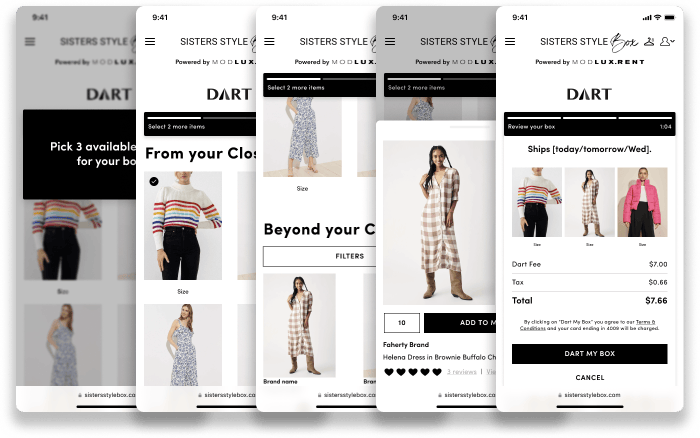
Expanding eligibility in a sought-after feature
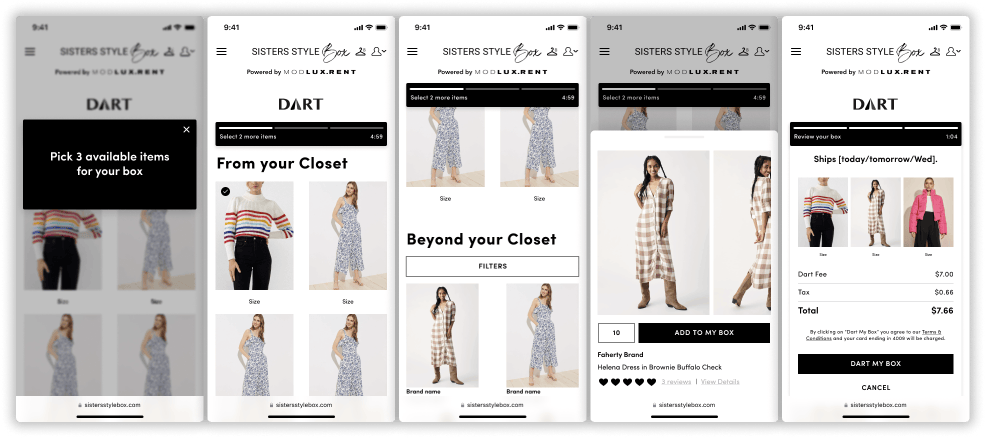
I led the redesign and expansion of Dart, a feature that lets users hand-pick items to receive in their next rental shipment. Initially limited to a small portion of each user’s closet, Dart suffered from low usability despite high interest. I spearheaded the design of Dart Beyond Closet, an evolution that opened the feature to all available inventory, simplifying the experience without refactoring the core product. The result was a smoother, more flexible experience that drove a 103% increase in Dart participation.
CaaStle's subscription brands, Haverdash, Gwynnie Bee, and ModLux, shared a common rental model: for a flat monthly fee, members fill a virtual closet with clothing they like, and a set number of items (2-5, based on their plan) are shipped to them from the Closet. Members can keep each box for as long as they like and swap out boxes as often as they want.
While this model worked well for most customers, there were moments when wardrobe needs are immediate and time-sensitive, like vacations, weddings, or special events, where users want more control over what arrives in their box.
To address this, Dart was a feature introduced that allowed users to hand-pick available items from their Closet for a flat fee, guaranteeing they'd receive those specific garments next.
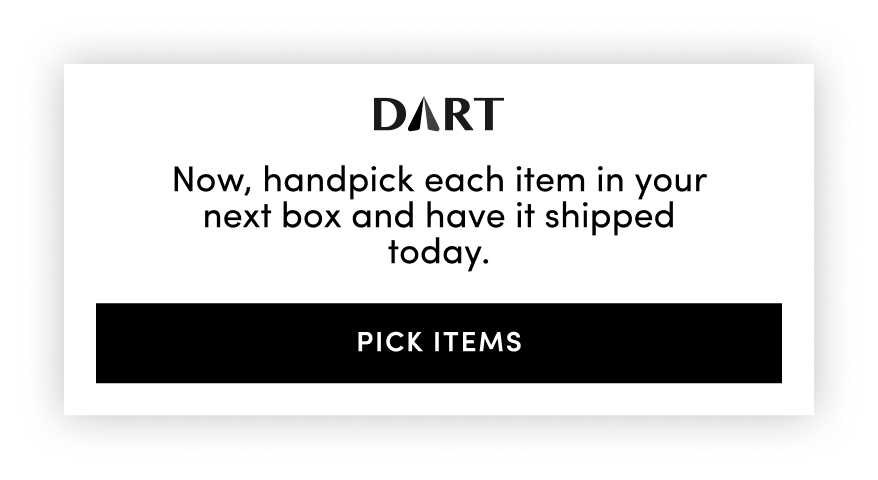
Although data showed strong interest in the Dart feature, conversion rates were surprisingly low.
After analyzing the behavior, we discovered a key issue:
The majority of users couldn't use Dart because only a small fraction of their Closet items were eligible.
In many cases, none of the items a user had added were available to borrow, which meant they couldn't use the feature at all.
Dart feature unavailable
Capitalize on the strong user interest in Dart by expanding the feature beyond the Closet, allowing users to select any available item in the catalog, not just those they had Closeted.
We called this "Dart Beyond Closet."
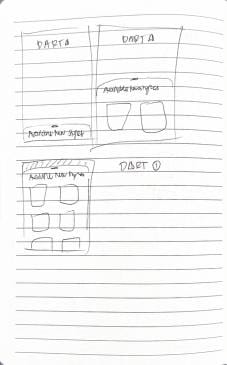
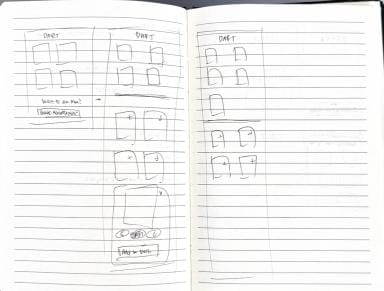
Sketches of the new feature
While the concept was simple, the execution wasn't. Expanding beyond the Closet introduced several UX and technical limitations:
Essentially, we were designing a new experience inside an existing one, and the initial prototype added too much friction to a feature that wasn't the product's core flow. We added an additional step where the user had to add items to her Closet in order to Dart them.
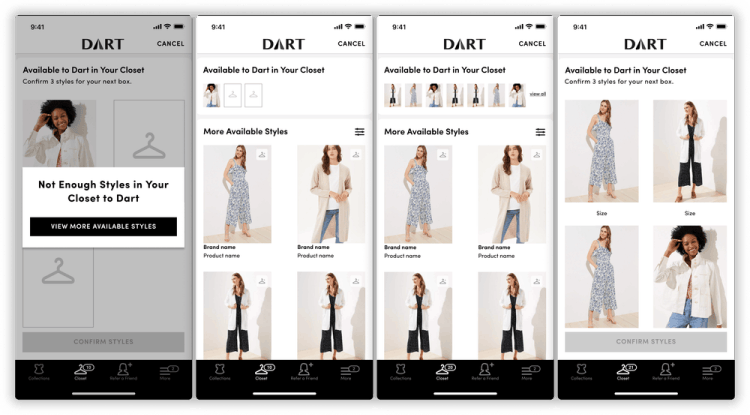
We received feedback that our proposed solution risked forcing broader changes to Closeting, which wasn't feasible given bandwidth and competing priorities.
We looked for opportunities to reuse and adapt existing interaction patterns to make the feature achievable with current constraints.
Two keep components guided the solution:
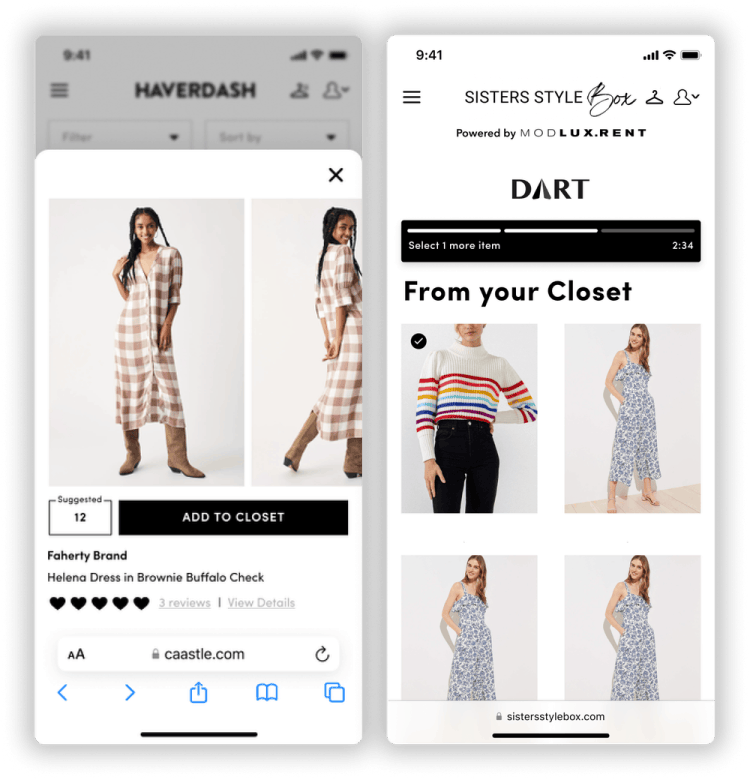
The Coaching Bar encouraged users to add items to their Closet and guided them through how to engage with the service, perfect for surfacing Dart opportunities in context without overhauling the main browsing experiences.
We created a simplified user flow that retained the spirit of the Dart Beyond Closet experience while keeping the core product intact. The prototype I provided served as both a proof of concept and a visual product requirement doc, clearly illustrating the user journey for cross-functional teams and leadership.
See how I did the prototype logic here.
Expanding Dart into Dart Beyond Closet allowed us to meet user demand for more flexibility while maintaining the integrity of the existing product experience. By reusing familiar patterns like Quick Closeting and the Coaching Bar, we introduced a scalable solution that balanced innovation with technical feasibility. The redesigned experience led to a 103% increase in Dart participation, proving that small, strategic design decisions can drive significant impact without requiring a full product overhaul.